VW Karmann Ghia Type 34
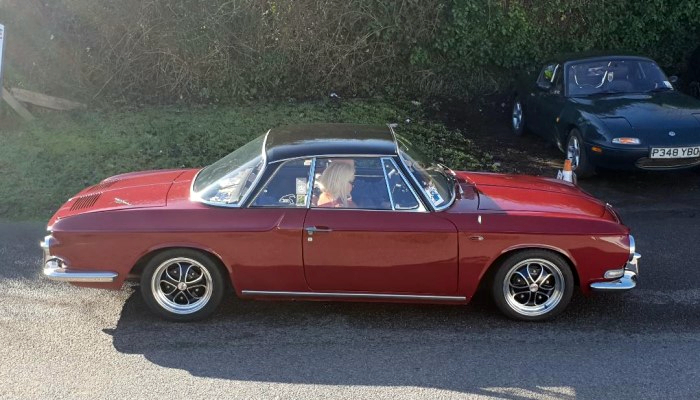
Photo: "VW 1500 Karmann-Ghia (1964) Type 34" by andreboeni
A Head-Turning Paradox on Wheels
Let’s cut through the nostalgia fog, folks. When you think "Volkswagen Karmann Ghia," you probably picture that impossibly sleek, bubble-butted coupe from the 50s and 60s – the automotive equivalent of a perfectly tailored Italian suit on a… well, on a slightly chunky German accountant. That was the Type 14. Charming. Iconic. The gateway drug for many a classic car enthusiast.
But today? We’re diving into the other Karmann Ghia. The Type 34 (1962-1969). The one that arrived after the accountant got his bonus, decided he really needed a midlife crisis convertible, and then panic-bought a fastback instead.
It’s the car Volkswagen thought it wanted to be, wrapped in sheet metal so beautiful it makes you weep… and powered by an engine so thoroughly Beetle, it makes you chuckle. Buckle up – it’s a tale of style, substance, and a whole lot of "well, that didn’t quite work."
The Setup: When German Pragmatism Met Italian Espresso Shots
Location Wolfsburg (Germany), circa 1961. Volkswagen is riding high on the absurd popularity of the humble Beetle. The Beetle: reliable, affordable, slow, and about as aerodynamic as a brick with headlights.
Then, in waltz the cool kids from Carrozzeria Ghia in Turin (yes, that Ghia, designers of Ferraris and Alfas before becoming Ford’s playthings) and the coachbuilders Karmann. Their pitch? "Hey VW, your Beetle is great, but imagine it… sexy. Like, really sexy. Think less 'budget commuter,' more 'continental drift on four wheels.'"
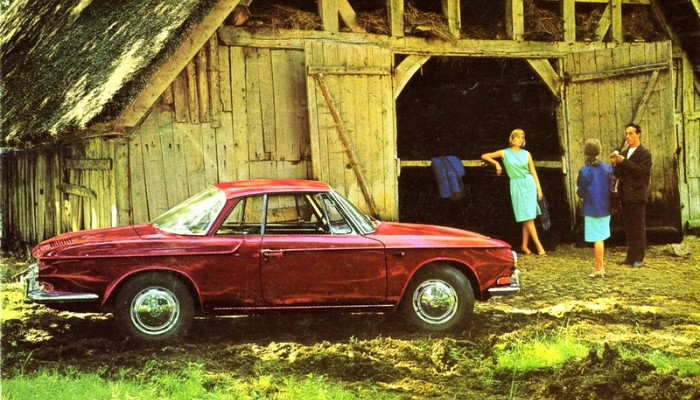
Photo: "1962 Volkswagen Type 3 Karmann-Ghia 1500" by aldenjewell
VW, perhaps emboldened by a few too many schnapps at the Frankfurt Motor Show, said, "Ja, sicher! Build us something ghia-fficially gorgeous!" And thus, the Karmann Ghia Type 14 was born (1955). It was an instant hit – a Volkswagen you could covet, not just tolerate.
But VW’s executives, flush with Type 14 success and staring down the barrel of competitors like the Mini and the soon-to-be Corvair, got greedy. They wanted more. More space? A bit. More power? Dream on. Mostly, they just wanted more of that sweet, sweet Italian styling magic, but grafted onto something slightly larger and… well, faster looking. Enter the Type 34.
The Car: Automotive Haute Couture, But...
Imagine the Type 14 Karmann Ghia. Now, stretch its elegant, sinuous lines over the slightly longer, slightly taller chassis of VW’s newfangled (and slightly more practical) Type 3 "Notchback" platform.
Give it a fastback roofline smoother than a diplomat’s handshake. Hide the headlights under sleek, aerodynamic covers (a huge deal in 1961, like putting your Beetle in aviators). Add delicate chrome trim that whispers "elegance," not "please tow me."
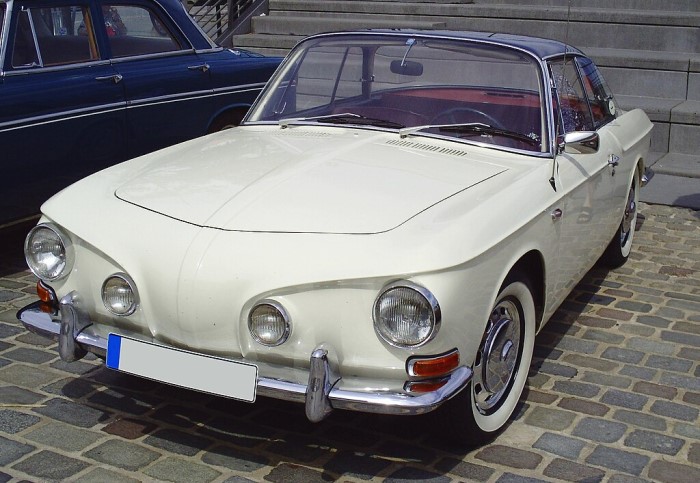
Voilà! The Karmann Ghia Type 34. Externally, it was automotive haute couture. Low-slung, impossibly clean lines, a profile that looked like it was carved from a single block of polished walnut. It looked like it should be whispering past you on the Amalfi Coast, sipping espresso, not chugging along behind a tractor on the Autobahn. It was, frankly, stunning. More elegant than a ballroom of tuxedoed otters.
And then… you opened the hood. Or rather, the floor. Because this fashion plate, this four-wheeled sonnet, was still powered by the same 1.5L (later 1.6L) flat-four "pancake" engine that chugged away in the standard Beetle.

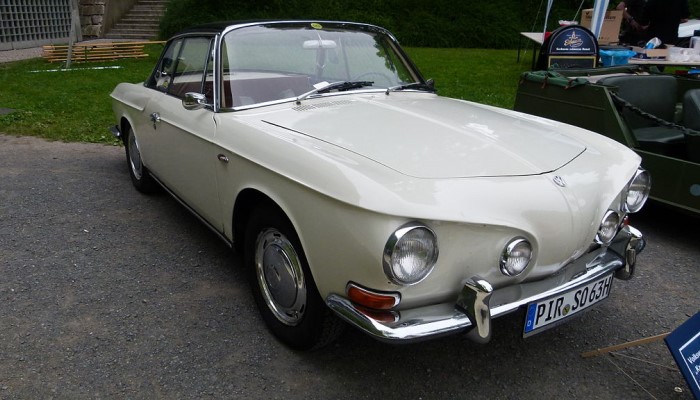
Photo: "Volkwagen Type 34 Karmann Ghia (1970)" by SG2012
Same basic suspension. Same general sense of "meh" when it came to forward momentum. You were sitting in a rolling sculpture hauling around an engine that, on a very good day, might muster enthusiasm comparable to a sleepy badger.
Engine Specs
| Engine Type | flat-4 |
| Layout | Rear engine, RWD |
| Displacement | 91 ci (1,493 cc) |
| Torque | 106 Nm |
| Power | 45 hp |
| Power/Weight | 50 hp / Tone |
Performance
| 0-60 mph (0-96 kph) | 21,0 s |
| Top Speed | 82 mph (132 kph) |
The Drive: All Drape, No Cape
Climbing into a Type 34 is like putting on a bespoke suit two sizes too small – thrillingly glamorous, slightly uncomfortable, and constantly reminding you of the limitations beneath the fabric. The interior is exquisite for its era: rich carpets (a rarity!), elegant instrumentation, a sense of occasion missing from the spartan Beetle. You feel… special.
Then you press the throttle. Thrum-thrum-thrum. The engine sings its familiar, slightly wheezy Beetle song. Acceleration? Let’s call it "thoughtful." Overtaking requires planning worthy of a D-Day invasion and a healthy dose of prayer.
Handling? It’s surprisingly competent for the era (thanks to the Type 3 chassis), but the weight of all that stylish steel means it handles like a ballerina wearing lead boots – graceful in theory, a bit ponderous in practice.
That beautiful low stance? Great for looks, terrible for rumbling over speed bumps. You’ll find yourself muttering "Gently, gently..." more often than a neurosurgeon.
It’s the ultimate automotive paradox: a car designed to look like it’s effortlessly devouring kilometers, that actually devours… patience. It’s the automotive equivalent of ordering a "Skinny Grande Non-Fat Quad Shot Extra Foam Cinnamon Dolce Latte" and getting a lukewarm cup of tap water. You paid for the idea, and the idea is spectacular. The reality involves a lot of waiting.
Why Did It (Relatively) Flop? By the Way, It Wasn't the Looks
Ah, the million-Deutschmark question. If it’s so gorgeous, why did VW only build about 42,000 of them over seven years? (Compared to hundreds of thousands of Type 14 Karmann Ghias). The Type 34, bless its stylish heart, suffered from a classic case of identity crisis meets engineering amnesia.
- The Pricey Proposition: That exquisite Ghia bodywork and Karmann craftsmanship didn't come cheap. The Type 34 cost significantly more than the standard Type 3 Notchback or Fastback, and way more than the original Type 14 Karmann Ghia. You were paying a hefty premium for… well, mostly just looks and slightly more room. For practical German families (VW's core market), this made about as much sense as putting gold leaf on a lawnmower.
- The Performance Punch-Down: In the early 60s, even modest sporting aspirations were becoming mainstream. Buyers expected a bit more zip from a car wearing this much finery. The Beetle engine, no matter how well-tuned, was fundamentally an economy unit. It made the Type 34 feel like a supermodel trying to win a lumberjack contest. Noble effort, wildly mismatched tools.
- Too Much, Too Soon (For VW): VW was still very much the "People's Car" company. The Type 34’s ambition – its sheer style – slightly terrified their conservative customer base. It was like the company suddenly started wearing eyeliner and quoting Proust. People weren't quite ready. They’d bought the Type 14 Karmann Ghia because it was still recognizably a Volkswagen, just prettier. The Type 34 crossed an invisible line into "not VW enough" for many.
The Legacy: The Underdog’s Underdog (Now Suddenly Hot)
For decades, the Type 34 was the wallflower at the Karmann Ghia dance. Overlooked, underappreciated, often misunderstood. It was the "weird one" – too expensive when new, too slow for its looks, too rare to be common knowledge. Many were neglected, parted out, or simply faded into the German countryside.
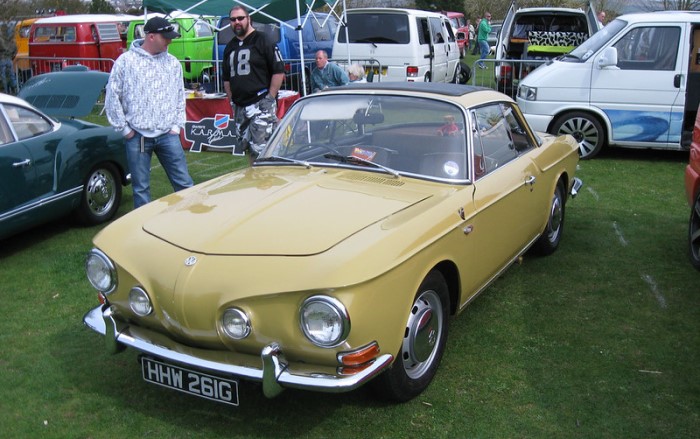
Photo: "VW Karmann Ghia 1600" by andreboeni
But here’s the delicious twist: rarity + outrageous style + fascinating backstory = sudden, intense cool. In recent years, the Type 34 has undergone a renaissance. Collectors and cognoscenti have woken up and smelled the… well, lack of speed.
They’ve realized it’s not just rare; it’s a rolling piece of design history – a glorious "what if?" moment where Volkswagen flirted with true elegance and got cold feet at the altar of practicality.
Today, finding a clean Type 34 is like spotting a unicorn wearing vintage sunglasses. Values have risen steadily. People finally appreciate that its "flaws" – the anachronistic engine, the impractical beauty – are precisely what make it so compelling.
It’s not trying to be fast; it’s trying to be beautiful. And in that, it succeeds spectacularly. It’s the ultimate antidote to today’s homogenized, computer-generated car designs. It’s got soul, even if that soul moves at a leisurely pace.
The Final Lap: Embrace the Glorious Contradiction
The Volkswagen Karmann Ghia Type 34 isn’t just a car; it’s a mood. It’s the reminder that sometimes, the most interesting things in life are beautiful messes. It’s proof that ambition, even when slightly misdirected, is worth celebrating. It looks like it cost a fortune to make (it did) and drives like it borrowed the engine from your uncle’s lawnmower (it did).
So next time you see one – and cherish the moment, because it’s rare – don’t laugh at it. Laugh with it. Salute its sheer, unadulterated gall. It dared to be different in a world of Beetles. It wore its heart (and its headlight covers) on its sleeve.
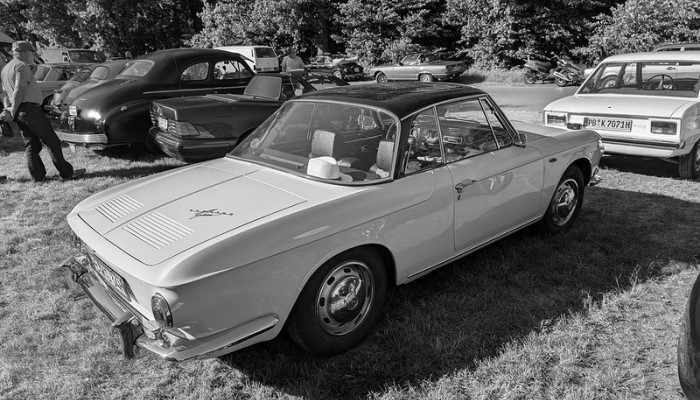
Photo: "VW Karmann-Ghia Typ 34" by Thomas Vogt
It failed commercially compared to Type 14, but in failing to be everything VW hoped, it succeeded in becoming something far more interesting: a perfectly imperfect icon of automotive desire, overreach, and enduring, slightly baffling charm.
It’s not the fastest Karmann Ghia. It might not even be the best. But by golly, in 1962, it was the boldest. And sometimes, boldness – even boldness that stutters like a carburetor in the rain – is exactly what the world needs.

Unique Car Zone Team
A group of several fans of everything that moves on four wheels, a few article creators, a couple of marketing strategists, designers, web developers, and lots of coffee.