Fiat 8V Supersonic
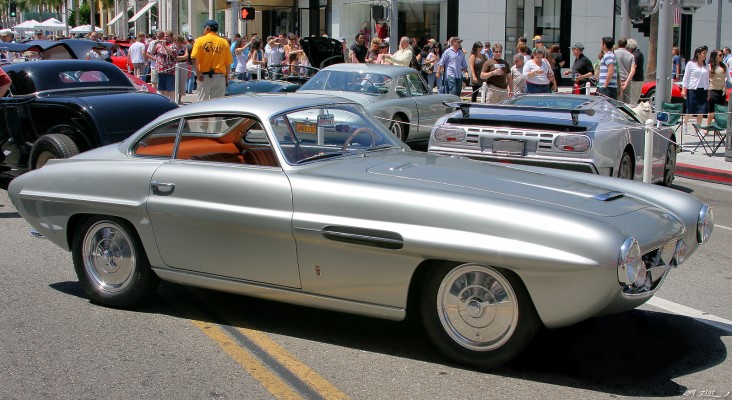
Photo: "1954 Fiat 8V Ghia Supersonic Coupe - silver - fvr" by Rex Gray
Forgotten Engineering Marvel That Deserves a Standing Ovation
Let’s talk about a car most people haven’t heard of—but absolutely should have.
Meet the Fiat 8V Supersonic, a gorgeous, rare, and wildly ambitious little Italian coupe from the early 1950s that somehow managed to combine cutting-edge engineering, drop-dead looks, and a rebellious spirit into one tiny, thrilling package. If cars were rock stars, the 8V would be that mysterious, genius-level guitarist who only released one album but still influenced an entire generation.

Photo: "1954 Fiat 8V Ghia Supersonic Coupe - silver - svl" by Rex Gray
So grab a coffee (or an espresso, if you’re feeling extra Italian), because this is the story of Fiat’s secret weapon—the car that proved they weren’t just about cranking out economical city runabouts.
The Backstory: When Fiat Decided to Play With the Big Boys
In the early 1950s, Fiat was known for reliable, functional vehicles—think the modest but practical 500 "Topolino." But behind closed doors, some clever engineers at Fiat were dreaming bigger. Much bigger.
Enter the Fiat 8V (the "V" stands for Vettura, Italian for car, and the "8" for eight cylinders). Unveiled in 1952, it was Fiat’s first and only post-war V8 engine—a secret project developed under the radar, partly to challenge Alfa Romeo and Ferrari in both performance and prestige.
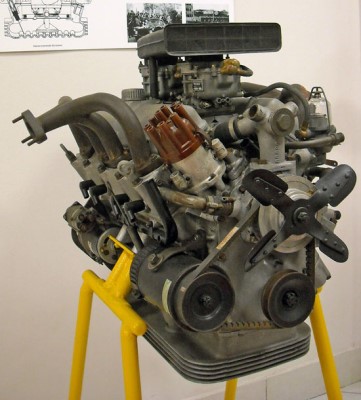
And it showed. The 8V’s engine was a 2.0-liter V8 that punched out around 105–115 horsepower—a massive number for its time—revving freely thanks to dual overhead cams and hemispherical combustion chambers. That kind of tech wasn’t just advanced for Fiat; it was advanced for anyone in the early '50s.
But here’s the twist: Fiat didn’t actually sell many of these. In fact, only around 114 units were ever built. Why? Well, partly because building a complicated V8 for a company used to simple fours didn’t make much financial sense. And partly because Fiat didn’t really know what do with it—so they let the coachbuilders go wild.
One question arises, doesn't it? Why term "8V" and not "V8"? Well, at that time Ford owned the name V8, so no one was allowed to use that term because it was protected as a trademark.
Coachbuilt Beauty: When Style Meets Rarity
Instead of selling the 8V as a complete car, Fiat sold the chassis and engine to independent Italian coachbuilders. And boy, did they deliver.
Bodied by legends like Ghia, Carrozzeria Zagato, Bertone, and others, each 8V had its own personality. But the real head-turner—the one that stands out in car shows, auction catalogs, and Instagram feeds—is the Supersonic.
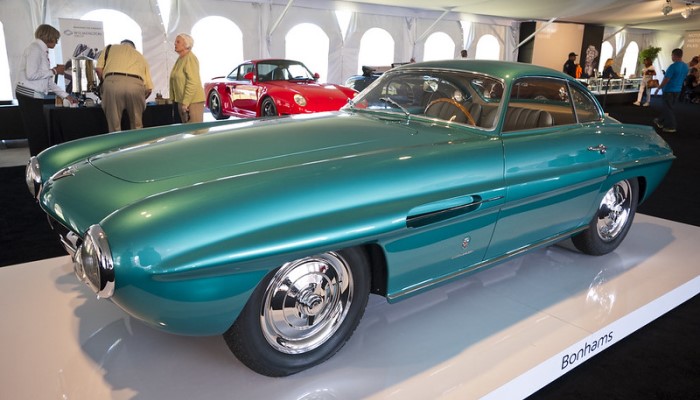
Photo: "Fiat 8V Ghia Supersonic" by Craig Howell
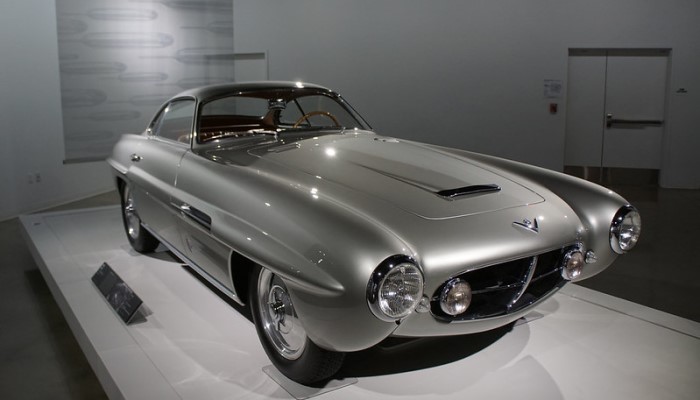
Designed by Giovanni Savonuzzi and built by Ghia in 1953, the Supersonic took its name from the jet age obsession of the era. And truly, this car looked like it belonged on a runway, not a road. With its fastback roofline, wraparound windshield, tail fins (yes, fins—this is the ‘50s), and that killer oval grille, the Supersonic screamed futuristic.
The design was clean, aggressive, and almost space-age. It looked like what you’d imagine a car from 2050 would look like… if it was designed in 1953. In fact, the Supersonic’s styling was so ahead of its time, you can see echoes of it in later icons like the Lamborghini Miura.
Only 14 Supersonics were made. That’s rarer than a winning lottery ticket, a silent teenager, or a traffic-free commute in downtown Milan.
Driving the Dream (Well, in Theory)
We can’t all drive a Supersonic—unless you’ve got $3 million and a museum to park it in—but based on the stories from the lucky few who have, it’s equal parts raw and refined.
The V8 engine—buried up front but balanced nicely—gives it surprising punch. With a top speed of around 180 kph (about 112 mph), it was genuinely fast for its era. And because it was light—thanks to its compact size and minimal weight—it felt agile and eager, especially on twisty Italian backroads. Speaking of top speed, let's take a look at other engine performance and data.
Engine Specs
| Engine Type | V8 |
| Layout | Front engine, RWD |
| Displacement | 122 ci (1,996 cc) |
| Torque | 146 Nm |
| Power | 107 hp |
| Power/Weight | 108 hp / Tone |
Performance
| 0-60 mph (0-96 kph) | 11,0 s |
| Top Speed | 112 mph (180 kph) |
But let’s be real: the 8V wasn’t flawless. The suspension was basic by today’s standards, brakes were… well, drum brakes all around, and reliability? Let’s just say you packed a mechanic with your luggage.
Still, that’s not why you bought an 8V. You bought it for the sound—the high-pitched snarl of a racing-inspired V8, the attention it got, the pure, unfiltered joy of driving something that was more art than machine.
Fiat 8V Supersonic in America
The first Supersonic was painted white with a red leather interior, and the front grille had additional headlights and no bumpers. Two identical Supersonics were shipped from Genoa, Italy, to the United States by Howard "Dutch" Darrin, founder of coachbuilder Hibbard & Darrin and co-designer of the Kaiser Darrin brand.
Darrin was impressed by the quality of Ghia's products and believed he could sell the two Supersonics in New York for a hefty profit. The following year, he exhibited his Kaiser Darrin Roadster at the 1954 New York World's Auto Show, where, according to legend, Paul Farago, a friend and owner of the 8V, visited his booth, accompanied by actress Lana Turner.
Miss Turner was fascinated by the Kaiser Darrin, but eventually came to inquire about the Supersonic, which she was determined to own after seeing the 8V parked outside a mysterious Manhattan nightclub. Miss Turner immediately bought the car.
Sometime later, Darrin's booth was visited by another successful car enthusiast, Briggs Swift Cunningham, a well-known entrepreneur and racer.
Darrin suggested buying another Supersonic. Cunningham made a deal with Darrin to give the car to his wife Lucy. He then invited Darrin to drive the Supersonic in the 12 Hours of Sebring on March 6, 1954.
Cunningham tested the 8V and was pleased with its performance, as evidenced by the check he offered for $9,500.
Why the Supersonic Matters
It says, "Hey, Fiat—yes, that Fiat—can build something extraordinary." It represents a moment of boldness, creativity, and Italian flair when the country was rebuilding its identity after WWII—and doing it in style.
It also reminds us that greatness isn’t always about volume. You don’t need to sell millions of units to make history. Sometimes, all it takes is a handful of visionary engineers, one brilliant designer, and a willingness to break the mold.
And let’s not forget—this car was born in the same era as the Ferrari 250 and the Maserati A6G. Yet, it held its own. Enthusiasts today often call it "The Ferrari That Never Was"—not because it replaced a Ferrari, but because it had the soul of one in a more humble (and way more affordable) package.
Price? A Bag Full of Money!
Today, the surviving 8V Supersonics are museum pieces. They fetch sky-high prices at auction – regularly topping $2 million, and some even more. They are adored by collectors, historians and anyone with a soft spot for mid-century Italian design.
But beyond the money and rarity, there is something deeply romantic about the Supersonic. It is a car that exists at the intersection of engineering ambition and artistic rebellion. It doesn’t follow rules. It rewrote them.
And in a world where most modern cars look like they came from the same design algorithm, the 8V Supersonic stands out as a reminder that cars used to be made, not manufactured. They had personality. They had soul.
Final Thoughts: A Hidden Gem Deserves Its Spotlight
So next time someone says Fiat is just for small city cars or retro reboots of the 500, smile knowingly and drop this little gem: “Actually, did you know Fiat built a V8-powered, coachbuilt, space-age coupe in the 1950s?”
Because yes—they did. And it was called the Supersonic. And it was kind of awesome.
The Fiat 8V Supersonic might not be a household name, but for those who love cars that defy expectations, it’s nothing short of legendary. It’s proof that even the most unlikely players can steal the show—especially when they’ve got a screaming V8 and a designer who dreamed in jet fuel.
So here’s to the underdogs, the one-offs, and the beautifully weird. Long live the Supersonic.

Unique Car Zone Team
A group of several fans of everything that moves on four wheels, a few article creators, a couple of marketing strategists, designers, web developers, and lots of coffee.