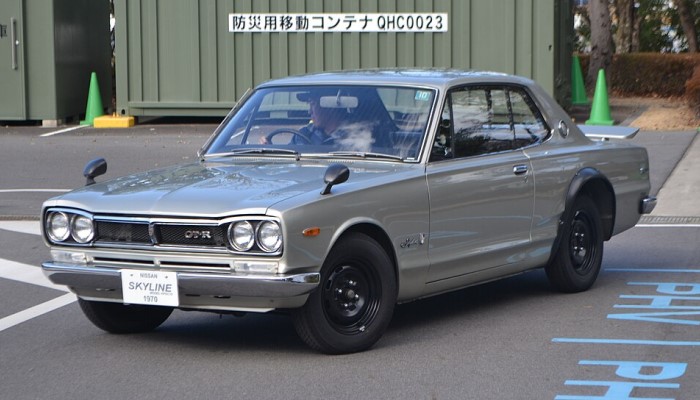
Nissan Skyline GT-R C10 "Hakosuka"
Forget Godzilla! Meet the Granddad of GT-Rs
Okay, car fam, let’s talk about legends. When someone says "Nissan GT-R," your brain probably instantly blasts the 2007 R35’s insane acceleration, those mean headlights, or maybe even the R32/R34’s turbocharged fury. All cool. But hold up.
Before the Godzilla (Jamiroquai) era, before the internet memes, there was a little… boxy sedan quietly laying the very foundation for everything that came after. Yeah, we’re diving into the Nissan Skyline GT-R C10, affectionately known as the "Hakosuka." And trust me, this unassuming rectangle is pure, uncut automotive magic.
First Things First: Why "Hakosuka"?
Pop quiz: What does "Hakosuka" mean? If you guessed "Holy Crap, That’s Fast!", you’re close, but not quite. Break it down:
- "Hako" (箱): Means "box" in Japanese.
- "Suka" (スカ): Short for "Skyline" (スカイライン).
So, literally: "Boxy Skyline." And oh man, is it ever! Compared to the sleek curves of the C210 that followed, the C10 GT-R (produced from 1969 to 1972) looked like someone took a regular Skyline sedan and gave it a haircut with a ruler. Flat planes, sharp edges, a greenhouse that screamed "functional," not "fashionable."
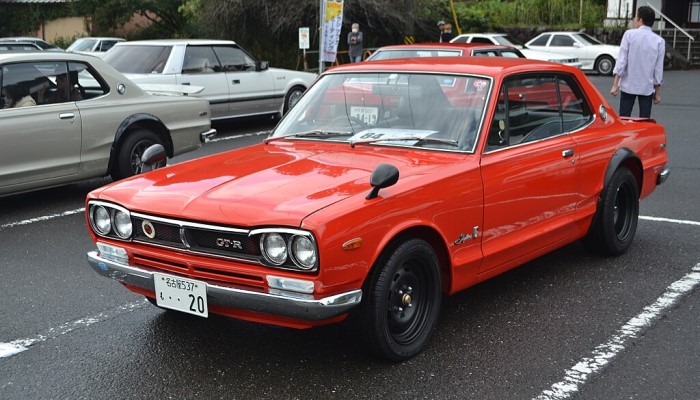
But here’s the kicker: that boxiness wasn't an accident. It was born from purpose. Nissan needed a homologation special to race in Japan’s grueling Group A Touring Car series. They needed to build street-legal cars to qualify a race car. So, they took the sturdy, mass-produced C10 Skyline sedan platform and stuffed in the good stuff. The box? It was just the shell for the beast within.
From Humble Sedan to Racing Juggernaut
Let’s set the scene: Late 60s Japan. Motorsport was exploding, and Nissan wanted a piece of the action, specifically against the dominant Prince Skyline competitors (yeah, Prince made the early Skylines before Nissan bought them). The weapon they developed? The S20 engine.
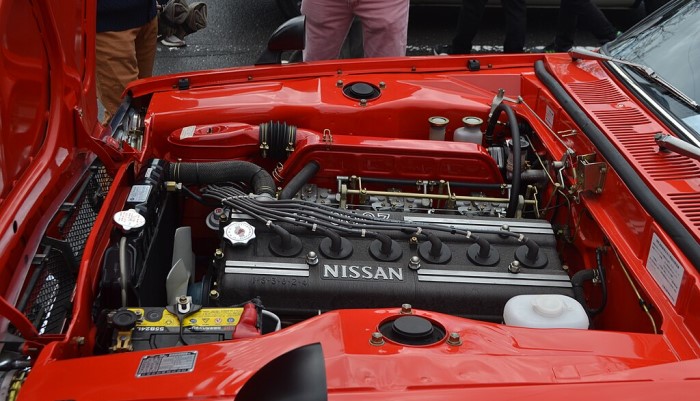
This wasn't just any motor. It was a 2.0L DOHC straight-six, hand-built by Nissan’s Prince division, breathing through triple Mikuni-Solex carbs. We’re talking 160 horsepower – modest by today’s standards, but rocket science for a 2.0L street car in 1969. It screamed to 7,000 RPM and sounded like a thousand angry hornets. Pure, unfiltered mechanical joy.
Engine Specs
| Engine Type | Inline 6 DOHC |
| Layout | Front engine, RWD |
| Displacement | 122 ci (1,989 cc) |
| Torque | 180 Nm |
| Power | 160 hp |
| Power/Weight | 143 hp / Tone |
Performance
| 0-60 mph (0-96 kph) | 6,5 s |
| 1/4 mile | 16,1 s |
| Top Speed | 124 mph (200 kph) |
But the magic wasn’t just the engine. Nissan went full nerdy-engineer-mode:
- Independent Rear Suspension: Unheard of for a mass-market Japanese performance sedan back then. This gave it serious grip and handling finesse.
- Limited-Slip Differential: Crucial for putting power down, especially on sketchy Japanese circuits.
- Lightweight Construction: They shaved grams wherever possible (aluminum hood, thinner glass) without sacrificing safety.
- Racing DNA: Seriously, this thing rolled off the line ready for the track. It wasn’t a softened street version; it was a barely-tamed race car you could drive home.
Then Came the Domination (Seriously, It Wasn't Fair)
This is where the Hakosuka stopped being just a cool car and became legendary. Nissan entered the C10 GT-R in the Japanese Touring Car Championship. And then… something kinda incredible happened.
It won. 49 races in a row.
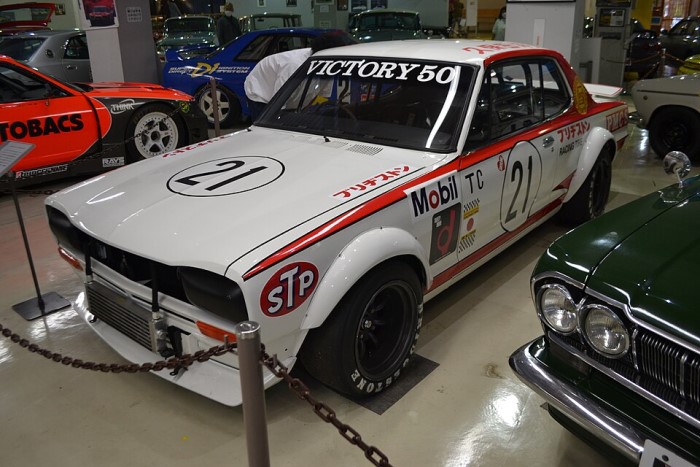
Let that sink in. Forty. Nine. Straight. Victories. From 1969 to 1972. It utterly annihilated the competition. Competitors were left floundering, trying desperately to figure out how this "boxy" sedan from a brand still finding its global footing could be so dominant.
It wasn’t just fast in a straight line; the independent rear end and balanced chassis made it handle. It was reliable. It was a total package. That 49-race streak wasn't luck; it was proof the formula worked perfectly.
The Underdog Story (Even Among GT-Rs)
Here’s the thing most people miss: The Hakosuka wasn't an instant superstar. In its own time, it was kinda… niche. It was expensive (thanks to all that racing tech), a bit crude compared to luxury sedans, and honestly, not that much faster in a straight line than some rivals on paper.
But Nissan proved what mattered was the total package on a race track. It was the ultimate underdog story within Nissan’s own lineup – the boxy, practical-looking sibling overshadowed by flashier models, yet quietly becoming the most successful.
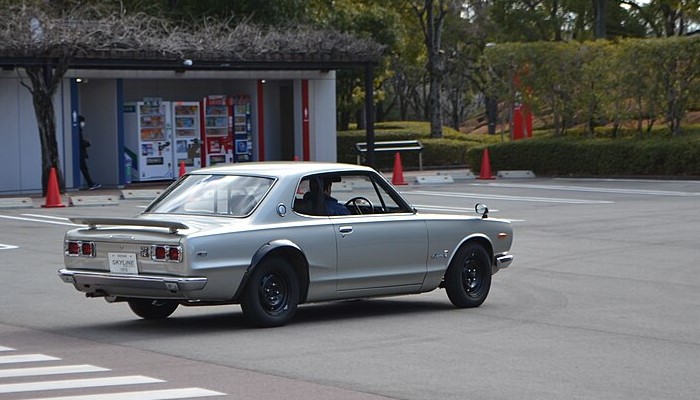
It also had the worst timing imaginable. Just as it was hitting its stride, the 1973 Oil Crisis hit like a ton of bricks. Gas prices skyrocketed, performance cars became politically and economically toxic, and Nissan had to pull the plug on the GT-R nameplate after the C10.
Production ended abruptly. The legend went dormant for over a decade before the R32 revived it. That sudden end, combined with its insane racing success, only added to its mystique.
Why Should You Care Today? (Besides It Being SUPER Cool)
Okay, so it’s old, slow by modern standards, and costs more than most people’s houses now (seriously, clean examples fetch $150k+ easily).
Why’s the Hakosuka still relevant?
- It’s the ROOT of the Tree: Every single GT-R since – the R32, R33, R34, R35 – bows down to the Hakosuka. It established the DNA: race-bred performance in a (sometimes) practical package, relentless engineering focus, and that killer S-series engine lineage. No Hakosuka? No Godzilla. Period.
- Pure, Unadulterated Driving: Forget dual-clutch, launch control, and 700hp. Driving a Hakosuka is raw. You feel everything. You row the (often notchy) 5-speed manual, feed it those carburetors, and wrestle with a chassis that demands respect. It’s analogue bliss in a digital world. It connects you to the road and the machine like few modern cars dare to.
- The Ultimate "Don't Judge a Book..." Story: It looks like your grandpa’s grocery-getter (a very square one). Then it wins 49 races straight. It’s the ultimate reminder that true performance and engineering excellence aren't always flashy. Sometimes, it’s hidden in a box.
- Cultural Icon: It’s cemented in JDM history. You see it in Initial D flashbacks, featured in Gran Turismo since the beginning, and revered by collectors and builders alike. Its boxy shape is instantly recognizable to petrolheads worldwide.
The Verdict: More Than Just a Box
The Nissan Skyline GT-R C10 "Hakosuka" isn’t just the first GT-R. It’s the original GT-R spirit. It’s proof that you don’t need 700 horsepower or carbon fiber wings to be legendary. You need a clear purpose, obsessive engineering, a dash of underdog grit, and the sheer will to dominate on the track.
Sure, it looks like it was designed in a spreadsheet (a very fast, very successful spreadsheet), but that boxy shape is the birthplace of an icon. It’s the humble, practical-looking hero that defied expectations and laid the unshakeable foundation for everything Nissan’s GT-R became.
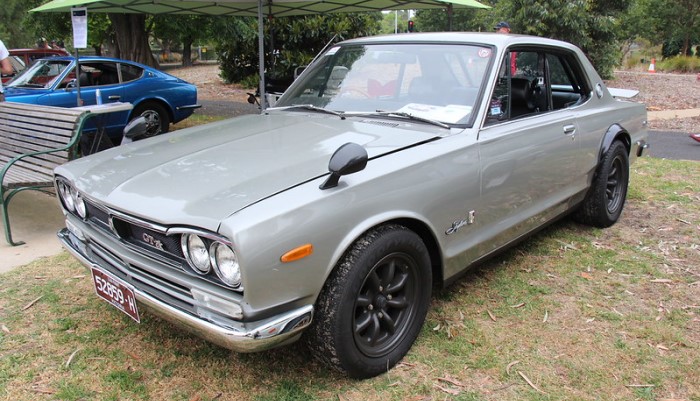
Photo: "1971 Nissan Skyline 2000 GT Coupe" by Sicnag
So next time you see a screaming R35 launch into the stratosphere, take a second to tip your hat to the quiet, boxy granddaddy that started it all. The Hakosuka didn’t just pave the way for Godzilla… it built the damn road. And honestly? We’re all better for it. Now that’s a legacy worth remembering.

Unique Car Zone Team
A group of several fans of everything that moves on four wheels, a few article creators, a couple of marketing strategists, designers, web developers, and lots of coffee.