BMW M635CSi / M6 (E24)
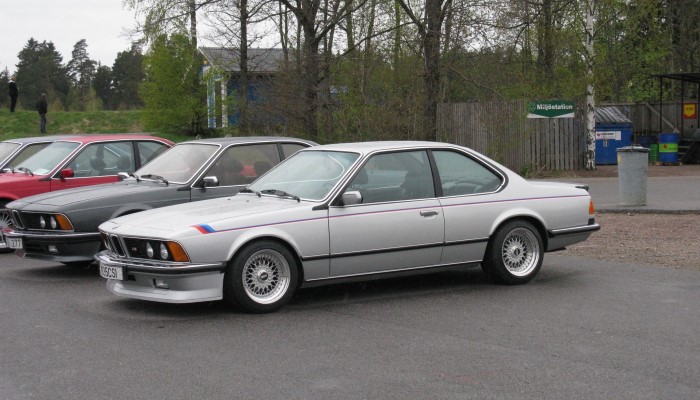
Photo: "BMW M635 CSi" by nakhon100
GT Car in the Truest Sense
There's a certain magic in the way some cars just feel like they belong on the road — not because they scream for attention, but because they glide through corners with grace, growl under hard throttle, and wear their pedigree like a well-tailored suit. The 1980s BMW M635CSi, known in North America as the M6, is one of those machines.
A fusion of track-ready performance and long-distance comfort, wrapped in one of the most elegant silhouettes BMW has ever created. And if you're into classic German engineering, you probably already have a soft spot for the E24 generation of the 6 Series.
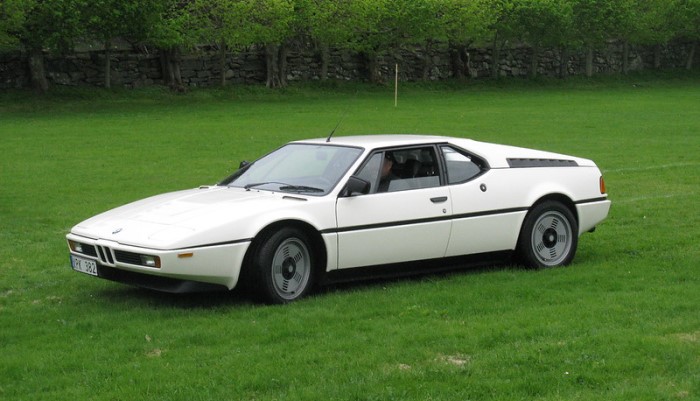
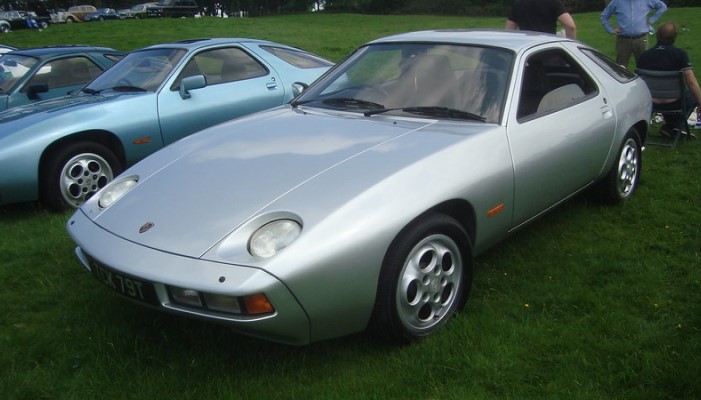
Let's rewind for a second. The mid-'80s were a golden era for performance sedans and GTs in Europe. Mercedes was flexing with the 500SEC, Porsche had the 928, and BMW needed something exceptional to stand tall in that lineup. Enter the M635CSi — a car born not just from the design board, but from the motorsport division itself: BMW M GmbH.
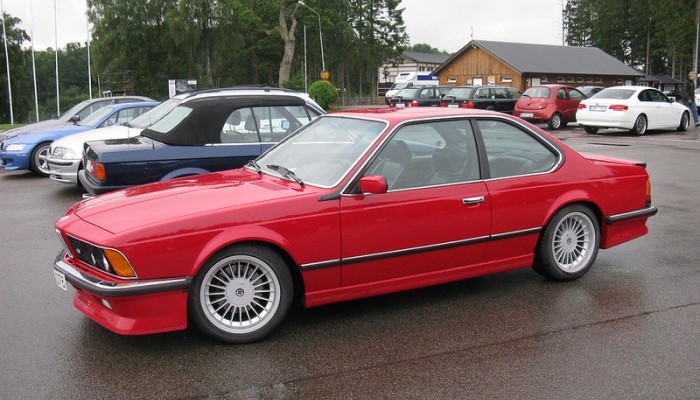
Photo: "BMW M635 CSi" by nakhon100
As legendary BMW M engineer Paul Rosche once put it: "The M635CSi wasn't just about power. It was about balance — power, handling, refinement. That's the M philosophy."
And boy, did they nail it.
Wait... The M6 vs. M635CSi: What's the Difference?
This is a common point of confusion. Here's the lowdown:
- M635CSi: Sold in Europe, Australia, and South Africa. Powered by the M88/3 engine.
- M6: Sold in the US, Canada and Japan. Due to emissions and fuel quality regulations, it used the S38B35 3.5L inline-six—slightly detuned to 256 hp.
Wait, what? So the US version had less power? Yes, unfortunately. The S38 engine was more emissions-friendly but lacked the free-revving magic of the M88/3. Purists still argue that only the M635CSi counts as the "real" M car.
Despite that, both versions are still highly desirable today. Well, let's say a few words about the engine...
The Heart of a Legend: That Inline-Six Beast
At the core of the M635CSi lies the M88/3 straight-six engine — a version of the same powerplant that powered the iconic BMW M1 supercar. In the M635CSi, it was tuned to produce around 286 horsepower — no small feat for a naturally aspirated engine in the early '80s.
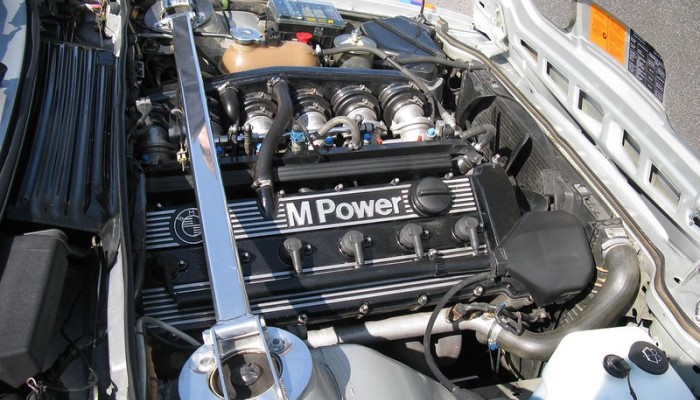
Photo: "BMW M 635 CSi" by nakhon100
In North America, emissions regulations called for some compromises, and the M6 got the slightly detuned version of the same block, the S38 engine, which still managed a solid 256 horsepower. Not quite as spicy, but still plenty potent.
Engine Specs (M88/3)
| Engine Type | Inline-6 |
| Layout | Front engine, RWD |
| Displacement | 211 ci (3,453 cc) |
| Torque | 340 Nm |
| Power | 286 hp |
| Power/Weight | 189 hp / Tone |
Performance (M88/3)
| 0-60 mph (0-96 kph) | 6,0 s |
| 0-100 mph (0-160 kph) | 14,4 s |
| 1/4 mile | 14,5 s |
| Top Speed | 159 mph (256 kph) |
Engine Specs (S38 - US)
| Engine Type | Inline-6 |
| Layout | Front engine, RWD |
| Displacement | 211 ci (3,453 cc) |
| Torque | 329 Nm |
| Power | 260 hp |
| Power/Weight | 160 hp / Tone |
Performance (S38 - US)
| 0-60 mph (0-96 kph) | 6,1 s |
| 0-100 mph (0-160 kph) | 17,1 s |
| 1/4 mile | 14,7 s |
| Top Speed | 144 mph (232 kph) |
That engine wasn't just powerful — it was musical. Open the throttle past 4,000 rpm, and the M635CSi sings a rising symphony of straight-six growl and induction roar. It's the kind of sound that makes you skip the radio and just listen.
Car and Driver put it this way in their original review: "It's not just fast — it's fast with class. The M6 has a composure that makes high speeds feel effortless."
That Body — Still Turning Heads After 40 Years
Let's talk about looks. The E24 6 Series was designed by Paul Bracq — the same guy behind the Mercedes-Benz 230 SL Pagoda. The long hood, fastback roofline, and wide shoulders gave it a presence that felt both aggressive and elegant. When BMW slapped on the M-specific bodywork — flared arches, deeper front spoiler, and discreet badging — it didn't need to shout.
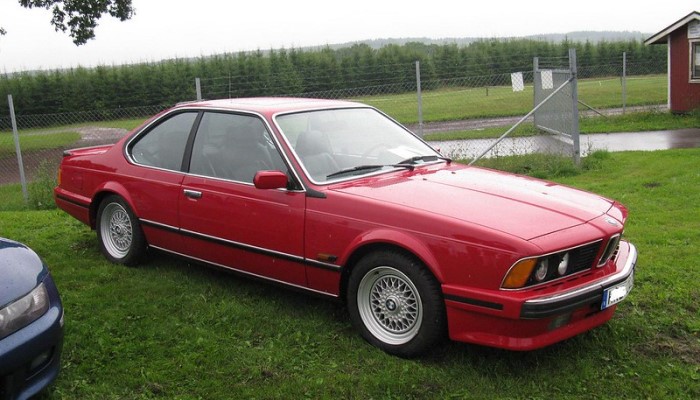
Photo: "BMW M635 CSi" by nakhon100
Inside, it's classic BMW luxury of the era. Thick leather seats, a three-spoke M steering wheel, leather dash, leather centre console, leather headlining and door cards. Leather, leather, leather... It feels like a cockpit built for covering continents, not just carving backroads.
But the M635CSi wasn't just about luxury and looks. It had the bones to back up the bravado. The chassis was stiffened, the suspension upgraded with stiffer springs and recalibrated dampers, and the rear axle was equipped with a limited-slip differential — all contributing to a driving experience that was both precise and forgiving.
Track-Bred, Road-Refined
Although not as hardcore as later M cars, the M635CSi was no softie. It was developed with input from BMW's motorsport division, meaning it had real track DNA. In fact, the car saw competitive success — particularly in the European Touring Car Championship and various endurance races. It wasn't rare to see an M6 sharing tarmac with the likes of the Ford Sierra RS Cosworth and Jaguar XJS.
"I remember driving one on the Nürburgring in the late '80s," says one of the many classic BMW fans. "It just flows. No drama, no twitchiness — just confidence. You feel connected, but never overwhelmed."
That blend of agility, stability, and real-world usability is what made — and still makes — the M635CSi so special. It wasn't a one-trick pony built for straight-line speed. It was a driver's car that you could live with every day.
The M6 You Never Knew You Wanted (But Definitely Need)
Today, the E24 M6 is more than just a collector's piece — it's a cult icon. Values have been climbing steadily, especially for European-spec M635CSi models with the M88/3 engine. Finding a well-preserved example is rare, and even rarer to find one that hasn't been modified beyond recognition.
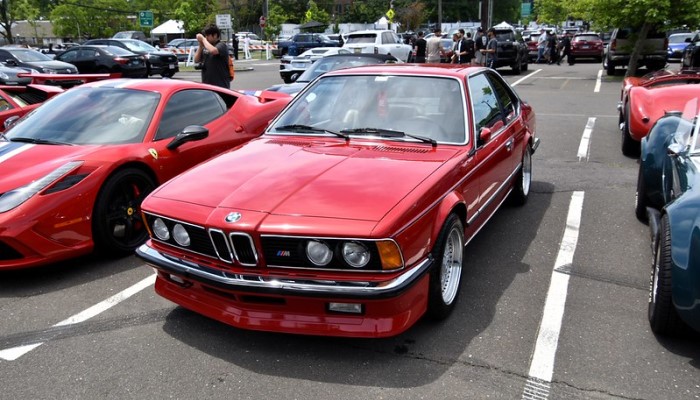
Photo: "BMW M6 Coupé (E24, 1988)" by usf1fan2
But for those lucky enough to own or drive one, the reward is timeless. It's a reminder of a time when performance didn't depend on turbochargers, traction control, or 10-speed gearboxes. Back then, it was about engineering purity — about making a car feel alive in your hands.
It's not the fastest car by modern standards, but it's one of the most honest. You can feel every bump, every shift, every corner. There's no filter. That's what makes it addictive.
Why It's a Collector's Dream
Today, clean BMW M635CSi / M6 examples command strong prices at auctions and private sales. Why?
- Low production numbers = rarity. (5,855 units)
- Originality matters—cars with matching numbers and documented histories sell for a premium.
- It's a pure driver's car in an era of driver aids.
- It bridges the gap between classic luxury and full-blown performance.
As famed automotive journalist Jeremy Clarkson once said: "The M635CSi was one of those rare machines that could be driven quickly and still make you feel like a gentleman."
Why the M6 Still Matters
In an age of hypercars with seven-digit price tags and AI-assisted driving modes, the M635CSi stands as a reminder that greatness doesn't require excess. It's a GT car in the truest sense — built for speed, but built for distance. Built for joy.
It also helped define what an "M" car could be. Before the M3 existed, before the M5 became a sedan assassin, the M635CSi was BMW M's flagship performance coupe. It set the tone for what was to come: purposeful design, motorsport engineering, and a commitment to driver engagement.
And while BMW has made faster, flashier, and more technologically advanced cars since then, few carry the same emotional weight as the E24 M6.
So if you ever get the chance to slide behind the wheel of a M635CSi — maybe at a classic car show, or better yet, on an open stretch of country road — take it. Let the inline-six wake up, let the steering talk through your palms, and let that iconic silhouette slice through the air like it did in 1984.
Because some cars don't just belong in garages — they belong on the road. And the BMW M635CSi? It was born to roam.
As BMW M fans often say: "They don't make 'em like this anymore."
And honestly? They probably never will.
Frequently Asked Questions (FAQ)
Q: Was the BMW M6 (E24) a success when it was new?
A: Commercially, not really. It was expensive and niche. But critically? Absolutely. It earned praise for its blend of speed, comfort, and engineering.
Q: How much is an M6 worth today?
A: Depending on condition and market, prices range from $20,000 to over $150,000+ for pristine, low-mileage M635CSi models. US-spec M6s are slightly less valuable but still highly sought after.
Q: Is the M6 reliable?
A: Like any 35+ year-old high-performance BMW, it requires care. The M88/S38 engines are robust, but electrical gremlins, aging seals, and fuel system issues can pop up. A well-maintained example is a joy to own.
Q: Can you daily drive an M6 today?
A: Sure—if you don't mind spending time on maintenance and fuel (it's not exactly efficient). But many owners use them as weekend cruisers, and they're fantastic for enthusiasts' events.
Q: Why didn't BMW make more of them?
A: The M6 was hand-built and expensive to produce. Plus, sales overlapped with the arrival of the 7 Series and later M5 (E28), which offered similar performance with more practicality.
Final Thoughts
Long before M badges became trendy, this car stood for purity, passion, and performance built the right way. It combined the elegance of a grand tourer with the heart of a supercar and the soul of a driver's machine. No traction control, no turbo lag (well, none at all), no drive modes—just throttle, gearshift, and a symphony from that inline-six.
If you ever get the chance to drive or own one, take it. You're not just experiencing a car. You're touching automotive history.
And remember: In a world full of electric everything and AI driving, the E24 M6 proves that sometimes, the best tech is the one you can feel.

Unique Car Zone Team
A group of several fans of everything that moves on four wheels, a few article creators, a couple of marketing strategists, designers, web developers, and lots of coffee.