Tatra 87 (T87)
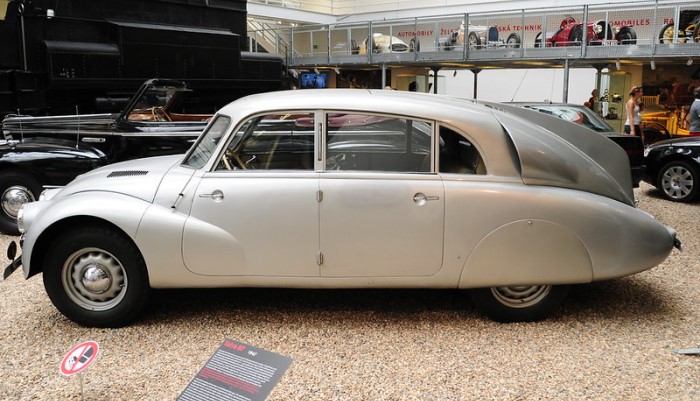
Photo: "Tatra" by Steven Lilley
The Nazi-Era Car That Outraced Time... and the Nazis
One of the most audacious beautiful, technically daring, and straight-up weird cars of the 20th century: the Tatra 87. This isn’t just another vintage automobile gathering dust in a museum. Nope.
The Tatra 87 was a futuristic, aerodynamic beast that looked like it time-traveled from the 1950s… but actually rolled off the assembly line in the 1930s. And yes, it actually outran the Nazis—more on that later.
If you’re into classic cars, conspiracy theories, or just design so bold it makes modern-day Teslas look timid, the Tatra 87 belongs on your radar.
So, What Exactly Was the Tatra 87?
Built between 1936 and 1950 by Czechoslovak automaker Tatra, the T87 was the brainchild of Austrian designer Hans Ledwinka, a man who basically treated car design like sacred art. He wasn’t just building vehicles—he was crafting wind-cheating, engineering marvels.
The Tatra 87 wasn’t flashy like a Bugatti or elegant like a Rolls-Royce. It was weirdly cool. With its streamlined teardrop shape, rear-mounted V8 engine, and a trunk that looked like it was smuggling a small spacecraft, this car was more spaceship than automobile.
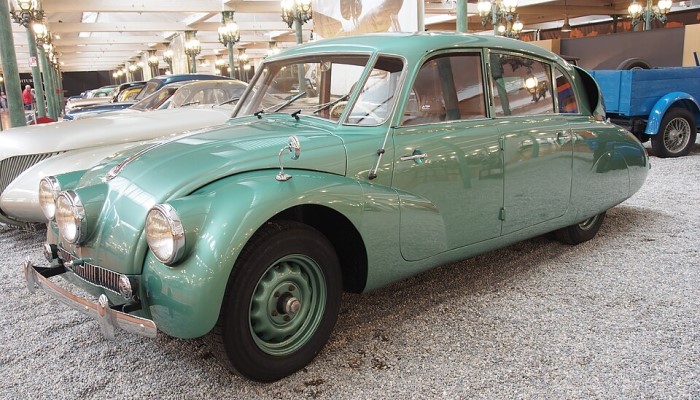
Despite being produced during a time when most cars had boxy shapes and engines up front, the T87 had a drag coefficient of 0.36—which, for the 1930s, was insane. For context, a modern Toyota Prius has a drag coefficient of about 0.24. So yes, the T87 was ahead of its time. So far ahead, it made people uncomfortable.
That Whole "Outran the Nazis" Thing
Here’s where it gets juicy.
The T87 became notorious during World War II for allegedly killing more German officers than enemy bullets. No, that’s not an exaggeration.
Thanks to its rear-engine design and high speed (it could hit around 100 mph (160 kph) — very fast back then), the T87 had a quirky handling trait: "pendeln" — German for "swinging." If you floored it on a winding road or lost focus on a curve, the rear-heavy car could suddenly snap into an oversteer and spin out—often with deadly results.
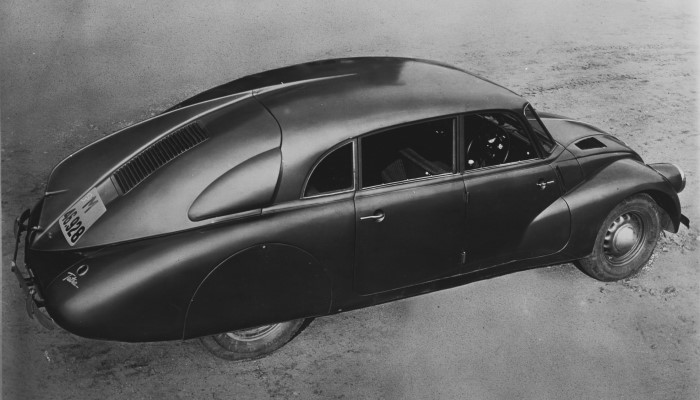
German officers, many of whom were used to front-engine luxury sedans, didn’t expect this kind of behavior. They’d speed down Czech mountain roads in their shiny new Tatras, only to be shocked by how violently the car could turn on them. As legend has it, so many Nazi officials died in T87 crashes that Hitler eventually banned the car for German officers.
Whether that ban actually happened is debated, but the myth persists—and honestly, it makes the T87 even more legendary. Picture it: a car so deadly, the Nazis themselves were scared of it.
Why the T87 Was Ahead of Its Time? (A Quick Tech Breakdown)
Let’s geek out for a second. The T87 wasn’t just stylish. It was revolutionary.
Aerodynamic Body: Streamlined, teardrop shape inspired by aircraft design. Drag coefficient of 0.36 — cutting-edge for the 1930s.
Rear-Mounted Engine: 2.9L V8 engine placed at the back. Improved traction, better weight distribution (but tricky handling).
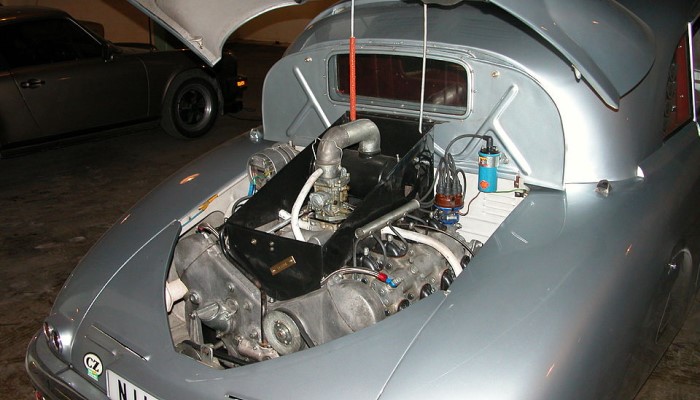
Photo: "1947 Tatra T-87 Saloon - Engine Compartment" by Philip Kromer
Air-Cooled Engine: No radiator, engine cooled by airflow. Lighter weight, less maintenance, ideal for rough terrain.
Central Tubular Frame: Backbone chassis with body mounted on top. Increased rigidity, inspired by aircraft construction.
Independent Suspension: All four wheels had independent suspension. Smoother ride, better handling than most contemporaries.
Yeah. While other automakers were still polishing chrome bumpers, Tatra was designing cars like an aerospace engineer on a caffeine bender.
And that shape? Totally intentional. Wind tunnel testing was still a novelty in the 1930s, but Tatra used it to optimize the body for minimal air resistance. The headlights were semi-recessed, the fenders smoothly integrated, and the rear tapered like a bullet.
And the engine? Let's take a quick look at the specifications and performance.
Engine Specs
| Engine Type | V8, air-cooled |
| Layout | Rear-mounted engine, RWD |
| Displacement | 181 ci (2,969 cc) |
| Torque | 190 Nm |
| Power | 85 hp |
| Power/Weight | 62 hp / Tone |
Performance
| 0-60 mph (0-96 kph) | 18,7 s |
| 1/4 mile | 21,6 s |
| Top Speed | 100 mph (160 kph) |
Fun fact: Ferdinand Porsche was deeply inspired by the Tatra 87 when designing the original Volkswagen Beetle. So much so that Tatra sued Volkswagen — and would’ve won in court if World War II hadn’t interrupted the legal process. Some even call the Beetle a "Tatra in disguise."
Post-War Life and Legacy
After World War II, production of the T87 continued until 1950—mostly for government and military use in Czechoslovakia. It never really found its footing as a mass-market luxury car, thanks to political chaos, nationalization of the Tatra factory, and the rise of Soviet-era industrial priorities.
But the T87's reputation only grew.
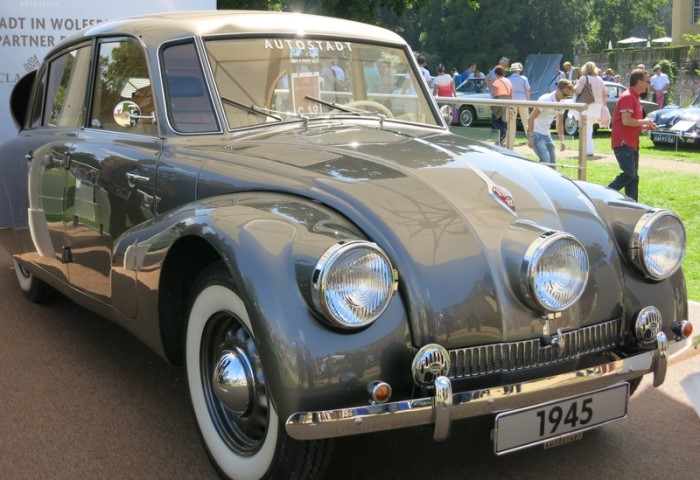
Car collectors, design lovers, and conspiracy theorists alike started digging up stories about the "Silent Killer," the "Czech Secret Weapon," the "Car That Fought the Nazis." It became a cult icon—especially among those who appreciate automotive bravery.
Even today, spotting a Tatra 87 on the road stops people in their tracks. There’s something alien about it. You see one, and you’re forced to ask: "When did they make that?"
Why Should You Care Today?
Glad you asked.
In a world of cookie-cutter SUVs and tech-packed EVs that all look the same, the Tatra 87 reminds us what cars used to be — bold, experimental, and unafraid to look weird.
It’s a symbol of design fearlessness. While modern cars are shaped by aerodynamics, safety regulations, and focus groups, the T87 was crafted by a single visionary who just said, “What if we build the fastest, sleekest, most unnatural car possible?”
Plus, it won a soft kind of victory against tyranny. Whether the Nazi-officer-killing tales are 100% true or just automotive folklore, the idea that a Czech car outsmarted (and maybe even outdrove) the occupying force is deliciously satisfying.
Fun Tatra 87 Facts That’ll Impress Your Friends
Just in case you need ammo for your next trivia night:
- Only about 3,000 Tatra 87s were ever made — rare as a quiet influencer.
- The car’s nickname in Czech? "Tačka" — literally meaning “the dot,” probably because of its bulbous rear end.
- Tatra didn’t just build cars — they made trains, trucks, and even tanks. This company was doing things.
- Some surviving T87s still get driven today, often by rich collectors who enjoy looking like mysterious Eastern European spies.
- Jay Leno, car-obsessed YouTube hero, owns one. And he calls it “one of the most futuristic cars of the 1930s.”
Final Thoughts
The Tatra 87 didn’t play by the rules. It looked weird, drove dangerously, and somehow became a symbol of resistance through sheer automotive audacity.
It’s a reminder that innovation doesn’t always come from Detroit or Stuttgart. Sometimes, it comes from a small factory in what’s now the Czech Republic, built by a man who believed cars should defy convention — even if they scared the hell out of the people driving them.
So next time you see a sleek, modern coupe hugging the road, remember: the Tatra 87 was doing that 80 years ago. And probably while outrunning a Nazi convoy.
"Czech" you later, T87. You wild, beautiful, slightly terrifying masterpiece.

Unique Car Zone Team
A group of several fans of everything that moves on four wheels, a few article creators, a couple of marketing strategists, designers, web developers, and lots of coffee.