Pontiac Fiero GT
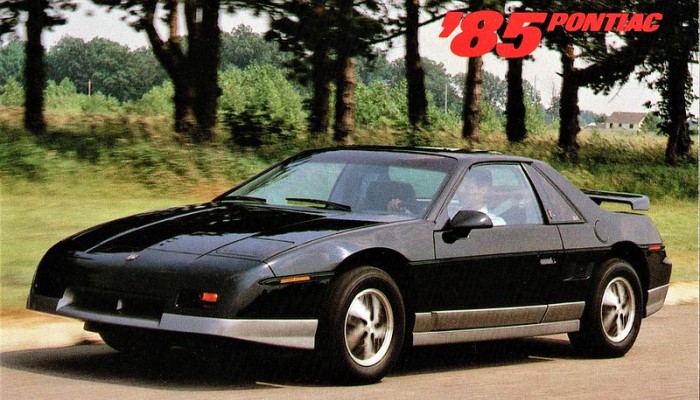
Photo: "1985 Pontiac Fiero GT" by aldenjewell
America’s Mid-Engine Underdog That Wished It Were a Ferrari
Let's talk about a car that could've been a contender. A car that dared to dream big—like top-speed-on-the-Autostrada big—but ended up more "midlife crisis with a check engine light" than "Italian stallion."
Ladies and gentlemen, strap in (literally, please—this car had sketchy seatbelts), it's time to shine a spotlight on the Pontiac Fiero GT: GM's one-and-done mid-engine American sports car that was equal parts engineering triumph and comedic tragedy.
This vehicle wasn't just a car—it was a statement. "Hey world," General Motors seemed to say, "We know Ferraris have engines in the middle. We can do that too. Probably." And so, in 1984, the Pontiac Fiero roared (well, more accurately, tattled) onto the scene with the bold claim of being America's first mass-produced mid-engine car.
It was supposed to shake up the sports car game. Instead, it mostly just shook—especially when the dashboard popped off on rough roads.
The Birth of a Legend... Or a Legend in the Making?
The Fiero was conceived in the early '80s, when American automakers were staring down the barrel of rising gas prices, stricter emissions laws, and the terrifying reality that Japanese imports were actually… better.
Pontiac, never content to be the sensible older sibling in GM's dysfunctional family, wanted to build something sporty, light, and—dare we say—cool.
"The Fiero was our attempt to build a real driver's car," said a GM engineer during a nostalgic interview. "We wanted to show Detroit still had soul, innovation, and, uh… plastic body panels."
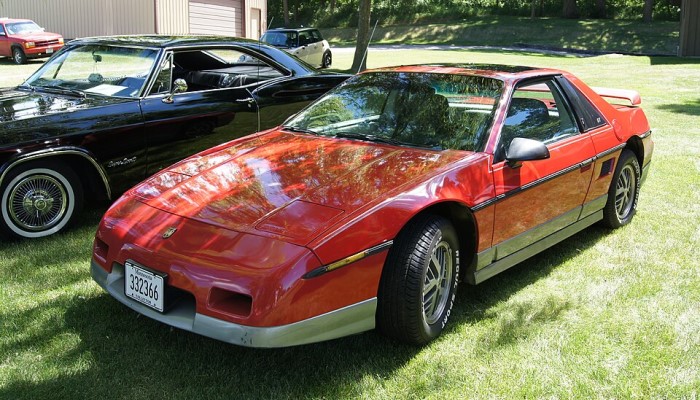
Photo: "85 Pontiac Fiero GT" by Greg Gjerdingen
Yes, friends, the Fiero had a fiberglass body. This was revolutionary at the time—lightweight, rust-resistant, and perfect for hiding the fact that the whole car was held together with hopes, dreams, and industrial adhesive. It looked futuristic, especially when you ignored the headlights, which resembled a startled squirrel caught in a porch light.
The base models started with a modest 4-cylinder engine straight out of a Pontiac Sunbird (yes, really), but the GT model—introduced in 1985—was the serious contender. With a 2.8L V6 churning out a heart-pounding 140 horsepower (in a good wind), the Fiero GT could go from 0 to 60 in approximately 8 seconds.
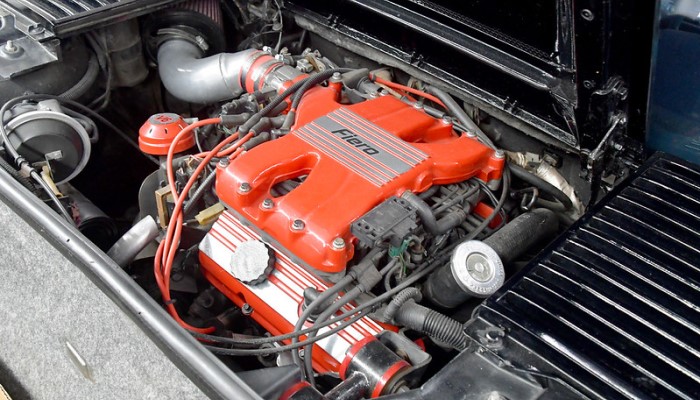
Photo: "1985 Pontiac Fiero GT" by Eric Friedebach
By modern standards, that sounds "long enough to finish your coffee." But in 1986, if your car didn't smell like burning oil or require a tetanus shot after driving, it was practically a spaceship. Here, take a look at the specifications and performance:
Engine Specs
| Engine Type | V6 |
| Layout | Mid-engine, RWD |
| Displacement | 173 ci (2,837 cc) |
| Torque | 230 Nm |
| Power | 140 hp |
| Power/Weight | 113 hp / Tone |
Performance
| 0-60 mph (0-96 kph) | 8,0 s |
| 0-100 mph (0-160 kph) | 26,5 s |
| 1/4 mile | 15,9 s |
| Top Speed | 126 mph (202 kph) |
"Mid-Engine? More Like Mid-Tier!"
Placing the engine behind the driver but in front of the rear axle gave the Fiero GT balanced handling and a sporty silhouette. It also gave teenage boys the illusion of being Formula 1 pilots.
Despite its cool engineering, the Fiero gained a reputation among gearheads for being more "quirky" than "quick." It was described by Car and Driver as "a car that looks fast standing still and feels slow moving." Ouch!
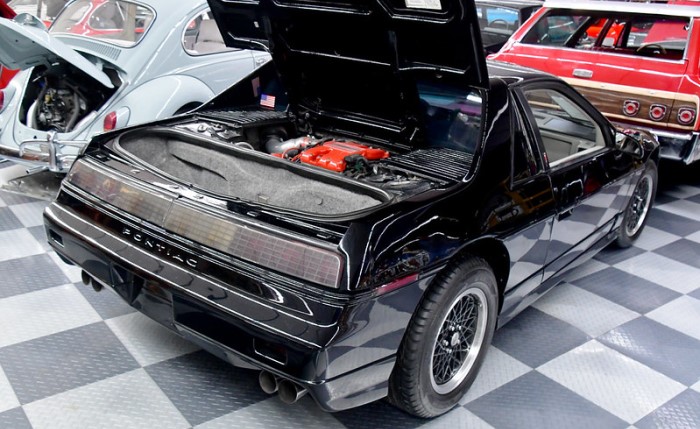
Photo: "1985 Pontiac Fiero GT" by Eric Friedebach
Still, enthusiasts loved it. The Fiero GT had pop-up headlights (a mandatory feature for any '80s cool car), a sleek wedge shape, and the kind of dashboard that made you feel like you were piloting a DeLorean if you squinted hard enough.
And let's not forget the dual exhaust tips—because nothing says "I'm serious about speed" like two little chrome farts sticking out the back.
The Great Fire Scare of the '80s
Now, we can't talk about the Fiero without addressing the elephant in the room—or rather, the fire in the engine bay. In the mid-1980s, Fieros had a troubling habit of spontaneously combusting. Not like "whoa, that exhaust note is fiery," but like "hey, is that smoke coming from under my hood or did I leave the curling iron on?"
Over 130,000 Fieros were reportedly recalled for engine fires caused by poor wiring layout, hot exhaust components near flammable bits, and what can only be described as "GM's gamble with Murphy's Law."
The media had a field day. The Today Show did a segment. Dateline NBC sent a camera crew. For a brief moment, the Fiero was famous—not for its performance, but for its ability to turn into a roadside barbecue.
GM responded with fixes, redesigns, and sternly worded memos to their engineering team that probably said things like "Please stop making cars that double as flamethrowers." By 1988, the fires were largely under control. But the damage was done. The Fiero's reputation was scorched, much like its engine compartments.
"Wait... It Was Actually Pretty Good?"
And yet—and yet!—the Fiero GT had redeeming qualities. Independent suspension, excellent fuel economy (up to 30 mpg on the highway), and a surprisingly fun driving experience. Enthusiasts who took the time to modify them often turned Fieros into legitimate track-day terrors.
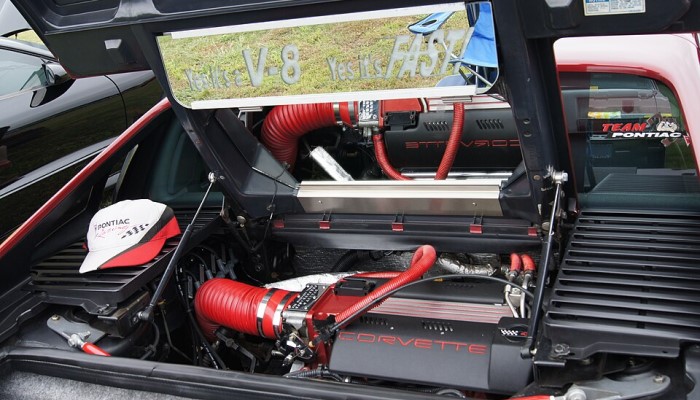
Photo: "87 Pontiac Fiero GT Engine V8 Corvette" by Greg Gjerdingen
It's true—the Fiero was limited more by its era than its design. With modern tuning, many have pushed them well past 200 horsepower. One famous Fiero drag racer known only as "Fiero Fred" reportedly hit 180 mph on a Nevada salt flat while blasting Bon Jovi. No one knows if this is true, but it's what we choose to believe.
Why Did It Die?
Despite a cult following, GM pulled the plug after the 1988 model year. Sales were declining, the fire rumors never fully died down (pun intended), and Pontiac executives decided they'd rather spend money rebadging Chevrolets as Pontiacs—which, let's be honest, was their true passion.
The Fiero became a footnote—a brief, glorious detour on the otherwise straight highway of American automotive mediocrity. But for those who loved it, it was more than a car. It was a symbol of daring, of innovation, of a time when Detroit said, "Let's try something different!"—and then immediately panicked and went back to building minivans.
The Legacy Lives On... In Garages and Memes
Today, the Fiero GT enjoys a well-earned cult status. It shows up at car shows not because it's fast or luxurious, but because it's interesting. It's the automotive equivalent of the kid who wore socks with sandals to prom but had the best dance moves. You remember it. You laugh at it. But deep down, you kind of respect it.
YouTube is full of Fiero restoration videos titled things like "Resurrecting My 1987 Fiero GT (And Hoping It Doesn't Kill Me)."
There are conversion kits to turn Fieros into EVs (because nothing says "eco-friendly" like replacing a V6 with a lithium-ion battery in a car that once caught fire).
And yes—there's even a Fiero GT emoji on some obscure car forums. (Okay, maybe not that last one. But it should exist.)
Why is the Fiero GT Still Interesting Today?
The GT models (especially 1986–1988) were significantly improved – better ride, better quality, nicer design (Fastback).
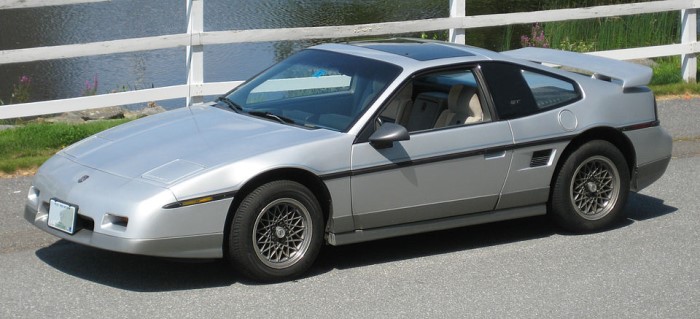
Photo: "1987 Pontiac Fiero GT" by StalePhish
Uniqueness: The only American sports car of the era with a mid-engine.
Potential for modification: Due to the mid-engine layout, enthusiasts often install more powerful engines (e.g. V8 swaps).
Relatively affordable classic: Not as expensive as some muscle cars, but offers an authentic feel of the American sports scene of the '80s.
Current Value?
Well-preserved examples: $8,000 – $15,000
Perfect examples with low mileage: over $20,000
Modified (V8, custom): Price varies depending on quality
The Fiero GT Wasn't Perfect. That's Why We Love It.
The Pontiac Fiero GT wasn't the fastest, the safest, or even the most reliable sports car of its era. But it was bold. It was different. It was American ingenuity wrapped in plastic and powered by hope.
It reminds us that sometimes, greatness isn't about winning the race—it's about showing up with a mid-engine layout, pop-up headlights, and a warranty that doesn't cover spontaneous combustion. It's about daring to be weird in a world that rewards conformity.
So here's to the Fiero GT: a car that never quite lived up to its dreams, but somehow became a legend anyway. As a friend of mine so poetically put it:
"The Fiero GT is like that one friend who says they're going to become a rock star. They never make it, but you still love them for trying—and for giving you a wild ride in their fire-prone sports car."
And if you ever spot a Fiero GT on the road, give it a wave. That driver? They're not just driving a car. They're piloting a piece of automotive history—the flawed, flaming, fabulous underdog that dared to be different.

Unique Car Zone Team
A group of several fans of everything that moves on four wheels, a few article creators, a couple of marketing strategists, designers, web developers, and lots of coffee.