Lotus Esprit Turbo (S2, S3)
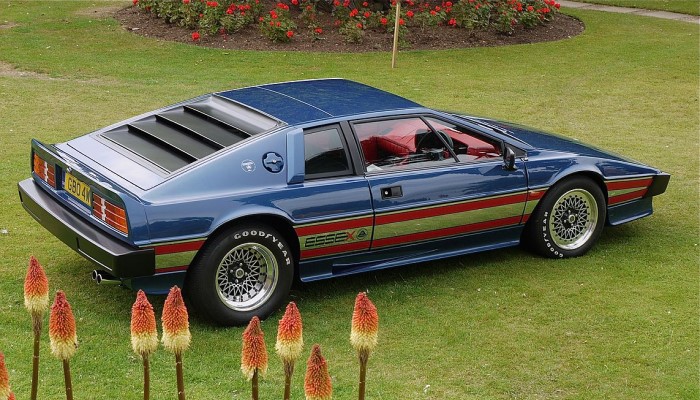
Photo: "1980 Lotus Esprit Essex Turbo" by Mick
The Sleeper Superstar of the '80s
Ah, the 1980s. Big hair, bigger shoulder pads, and... the Lotus Esprit Turbo? Okay, maybe that last one didn't dominate pop culture quite like Madonna or Michael Jackson, but for car enthusiasts, the Esprit Turbo was nothing short of a mechanical masterpiece wrapped in a wedge-shaped dream.
If you've ever seen one of these sleek, low-slung sports cars zipping silently through the streets—looking like it just escaped from a sci-fi movie—you're not imagining things. Designed by the legendary Giorgetto Giugiaro (yes, that Giugiaro), the Esprit Turbo wasn't just fast. It was fast and futuristic, looking like it belonged on the moon while actually tearing up tarmac.
Let's take a dive into what made this British-born, Italian-styled rocket a cult classic—and why it's still revered by driving purists today.
What Was the Lotus Esprit Turbo?
Released in 1980, the Lotus Esprit Turbo marked a turning point for Lotus. The original Esprit, which debuted in 1976, was already impressive—a mid-engine, rear-wheel-drive sports car built for handling and style. But the Turbo cranked things up a notch, quite literally, by shoving a turbocharger into the engine bay.
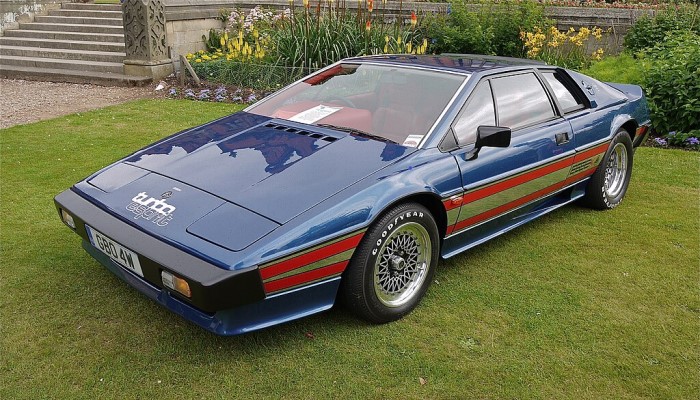
Photo: "Lotus Esprit Essex Turbo (S2)" by Mick
This wasn't just "added boost" for the sake of bragging rights. Lotus, under Colin Chapman's visionary leadership, believed in adding lightness. More power? Sure. But only if it didn't come at the expense of the car's nimble balance and raw driving experience.
The result: a 2.2-liter (133 ci) inline-four engine with a single Garrett AiResearch turbocharger, pushing out around 210 horsepower. Not earth-shattering by today's standards, but in the early '80s? That was supercar territory—especially in a car weighing just under 1,100 kg (2,425 lbs).
Engine Specs
| Engine Type | Inline 4, 16 valve Turbo |
| Layout | Mid-engine, RWD |
| Displacement | 133 ci (2,174 cc) |
| Torque | 271 Nm |
| Power | 210 hp |
| Power/Weight | 178 hp / Tone |
Performance
| 0-60 mph (0-96 kph) | 5,5 s |
| 0-100 mph (0-160 kph) | 14,7 s |
| 1/4 mile | 14,3 s |
| Top Speed | 152 mph (245 kph) |
Why It Was Cool (Beyond the Looks)
Let's be real—the Esprit Turbo could stop traffic just by existing. That wedge shape, those pop-up headlights, the smooth body lines... it looked like something NASA engineers would drive to the office.
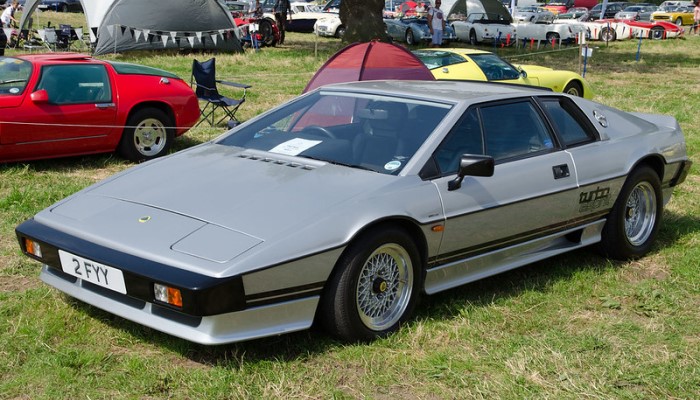
Photo: "Lotus Turbo Esprit (1983)" by SG2012
But its charm wasn't just skin-deep. Here's what made it special under the hood:
Turbo lag? Meet turbo drama. The Esprit Turbo was one of the first mass-produced (well, "mass" for a low-volume brand) turbocharged cars in the UK. And yes, it had noticeable turbo lag—about 2 to 3 seconds where it felt like nothing was happening… then whoosh!
The boost kicked in, and you were suddenly pressed into your seat. It was unpredictable, raw, and exciting—a true analog driving experience.
Precision handling. Thanks to Lotus's obsession with lightweight engineering and perfect weight distribution, the Esprit carved corners like a scalpel. No power steering, no traction control—just skill, feel, and a manual 5-speed gearbox. Driving it felt like a conversation between you and the road.
It sounded like thunder. The 4-cylinder turbo might not have had the V8 roar of American muscle, but it made up for it with a high-pitched whine from the turbo, a snarly exhaust note, and mechanical clatter that screamed enthusiast's car. It was like a race car you could (theoretically) use on the street.
A Star Turn (Literally)
If you know the Esprit, you probably know it from The Spy Who Loved Me—Roger Moore's James Bond flew one (well, swam, actually) in that iconic submarine car scene. But that was the non-turbo. The Esprit Turbo never actually appeared in a Bond film, but its mystique was already locked in thanks to its predecessor.
Still, the Lotus Esprit Turbo inherited that jet-set aura. It wasn't a garage ornament—people actually drove these. But you don't need Hollywood for legitimacy when you've got performance pedigree and head-turning design.
Living with the Lotus: Quirks and Charms
Owning a Esprit Turbo (S2, S3) today? That's a commitment. This isn't a car you buy for reliability or convenience. It's a love letter to analog driving, with a few footnotes in red ink.
Pros:
- Timeless Giugiaro design
- Thrilling, raw driving dynamics
- Lightweight = agile handling
- Turbo power delivery is dramatic (in a good way)
- One of the original supercars before the term was overused
Cons:
- Notorious reliability issues (especially early turbos)
- Spartan interior—no frills, no luxuries
- Parts can be hard to find
- Ride quality? Let's just say potholes are your enemy
- Not exactly fuel-efficient
But hey, if you're into turn signals that take two tugs to activate and windows that occasionally decide not to roll up, you'll fit right in.
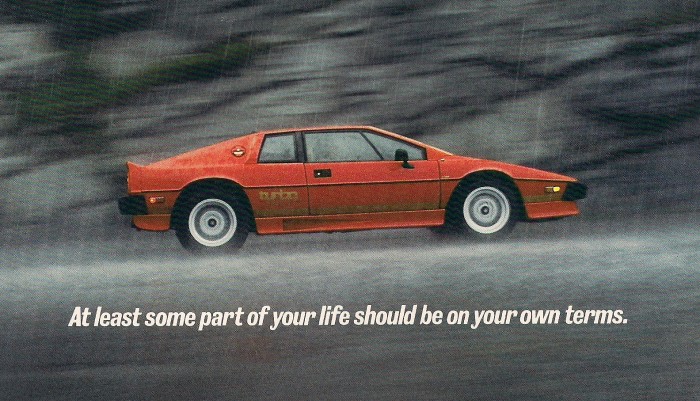
Photo: "Lotus Turbo Esprit 1986" by Hugo-90
Fun fact: The Esprit Turbo's short production run makes it rare. Really rare. And that scarcity, combined with its performance and design, has made it a darling at auctions and classic car shows.
Why It Still Matters
In an age of touchscreen infotainment, launch control, and self-parking systems, the Lotus Esprit Turbo (S2, S3) feels like a rebellious teenager at a board meeting. It doesn't care about your comfort. It doesn't coddle you. It demands attention, skill, and respect.
But that's exactly why people love it.

Photo: "Lotus Esprit Turbo" by Calreyn88
It represents a time when cars were felt, not just driven. You didn't just steer it—you wrestled with it, listened to it, and learned from it. And when you finally mastered its quirks, the reward was pure, unfiltered driving joy.
Plus, let's be honest: if you show up to a car meet in an Esprit Turbo, you're instantly the coolest person in the parking lot. Even if the door handle sticks.
Final Thoughts: A Legend, Not a Relic
The Lotus Esprit Turbo wasn't perfect. It leaked oil. It rattled. It scared new drivers with its sudden turbo surge. But it also thrilled, inspired, and stood the test of time.
Today, surviving Esprit Turbo models are prized by collectors and restored with care. Values? They've been creeping up steadily. In recent years, well-maintained examples have sold for well over $40,000—proof that people still appreciate bold design, light weight, and mechanical honesty.
So whether you're a die-hard Lotus fan, a '80s car nut, or just someone who appreciates automotive art with a bit of attitude, the Esprit Turbo deserves a place in your dream garage.
Now, if only it came with cup holders.

Unique Car Zone Team
A group of several fans of everything that moves on four wheels, a few article creators, a couple of marketing strategists, designers, web developers, and lots of coffee.